
Do we really know what causes cancer? Is it Viruses as Royal Rife proclaimed? Is it parasites as Hulda Clark maintained? Fungi? Bacteria? Overload of mycotoxins from all of the above? Toxins from heavy metals and/or chemicals building up in the body? Skewed genetic expression? Metabolic disorders exacerbated by chronic stress and/or emotional crises? Hormonal disruption? Low voltage at the cellular level? Mitochondrial dysfunction?
Countless theories have evolved over time and still, with the War on Cancer and all, we seem adrift in the search for answers. As the occurrence of cancer has exploded over the last few years, affecting young and old alike, solutions have evaded us, with the most costly and risky “remedies” often merely buying time. That’s not to say there hasn’t been progress, but most cancers continue to take new forms, requiring more study and therapeutic advances. All of them expensive, many of them devastating to the body as a whole.
Cancer now strikes 30% to 50% of all Americans in their lifetime, compared to just 5% at the turn of the 20th century. This is not the result of better screening or recordkeeping — it reflects fundamental shifts in how your body’s terrain is shaped by modern living. What was once rare has become common, and the old explanations are no longer enough.
Small wonder that when Royal Rife advanced the notion (and the hope) that cancer could be resolved without further damaging the body, asserting that he had devitalized bacteria and viruses in a petri dish, he was lauded as a champion by numerous prominent physicians and researchers. His work was discredited by others, most of whom had interests other than finding a cure, and certainly not a therapy they could not control. Rife’s efforts were thus undermined. He was betrayed. And ultimately, his work was suppressed. His story is not unique.
People who have been following us for years know that we hold alternative views regarding cancer. It’s worth noting that our views are not static, meaning they evolve over time as more information becomes available. To say “the science is settled” in any instance is to obscure the fact that the very nature of science is to evolve as new information reveals itself. Thus we do not expound merely on the ability of electrical stimulation to devitalize micro-organisms, but have expanded to include in our discussions the inherent ability of the current, tuned at frequency, to restore balance to the systems in the body. This refers to the metabolism, the lymphatic flow (essential for proper detoxification), oxygenation and effective circulation of the blood, enzyme catalysis, function of the nerves, inflammation management, and so forth. (The FDA, needless to say, prohibits us from making any such claims.)
In this series, we will briefly review some of the evolving theories about cancer and cancer treatments. This is not intended to be an in-depth discussion, but we will refer you to other sources for more thorough examination of potential underlying causes and prospective methods of addressing them. Our purpose has always been to help you connect the dots and help you arrive at decisions best suited for you and your loved ones.
Royal Rife
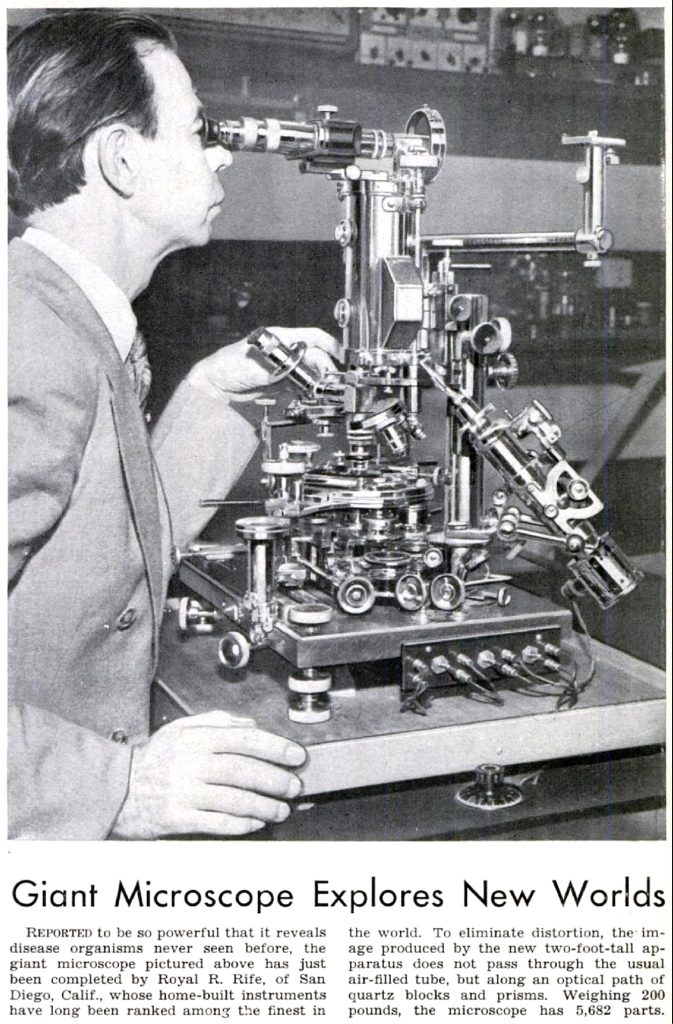
In the 1930s, Royal Raymond Rife proclaimed the following:
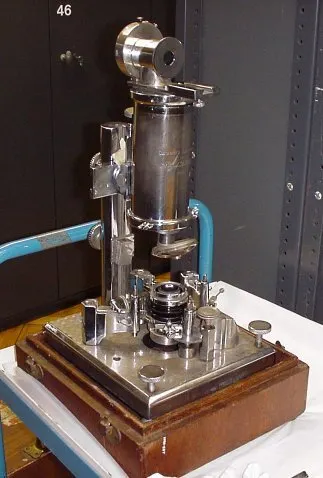
- He had built an extraordinarily powerful microscope capable of viewing living viruses.
- He identified microorganisms responsible for cancer.
- He destroyed these organisms using precisely tuned electromagnetic frequencies, which he called “Mortal Oscillatory Rates” (MORs).
The theory was appealing because it suggested that cancer had a single infectious cause, and that it could be cured noninvasively. It proposed that treatment could selectively destroy disease without harming healthy tissue. This, in retrospect, is a simplistic view.
Though we have built devices for many years that are based on his research, we have long believed that there are often multiple underlying causes that contribute to the disease. And we have always operated on the principle that one size does not fit all in terms of what may be required to address the condition.
Conventional sources, including AI, will tell you that his results have never been independently reproduced. What this conveniently overlooks is the fact that prominent medical doctors who associated themselves with Dr. Rife (including Dr. Milbank Johnson, Professor of Physiology and Clinical Medicine at the University of Southern California; Dr. Arthur Isaac Kendall, Department of Bacteriology at Northwestern University Medical School; and Dr. Edward C. Rosenow, of the Mayo Foundation to name just a few) reported that they had reproduced similar results with multiple patients. You need only read a few articles to learn what happened to those who most supported Rife and his work.
After his support of Royal Raymond Rife, Dr. Milbank Johnson faced severe professional isolation and, according to conspiracy theories surrounding his death, foul play.
Professional Isolation and AMA Pressure
By the late 1930s, Johnson stood nearly alone in his advocacy. While other physicians who had initially supported Rife (such as Dr. George Dock) reportedly recanted or were silenced through grants and honors from the American Medical Association (AMA), Johnson refused to abandon the research.
- Defiance: He remained one of the only two doctors (along with Dr. James Couche) who did not surrender their Rife “Beam Ray” equipment despite threats from the AMA to revoke medical licenses.
- Continued Advocacy: Even after quarreling with Rife personally in 1938 over an honorary degree offer, Johnson continued to seek validation for the technology. In 1942, he sent a Rife machine to Dr. Gruner in an attempt to secure international confirmation of the cancer cure.
Death and Controversy
Dr. Johnson died on November 17, 1944, under mysterious circumstances that have fueled decades of conspiracy theories.
- Official Cause: The immediate cause of death was recorded as a heart attack.
- Conspiracy Claims: Proponents of Rife’s work claim Johnson was fatally poisoned to prevent him from holding a press conference where he intended to announce the 100% success rate of the 1934 cancer clinic study.
- Exhumation Allegations: Some accounts allege that federal investigators exhumed Johnson’s body years later (often cited as the late 1950s) and discovered evidence of poisoning, though no official public records or mainstream historical accounts confirm this finding. His research papers and records regarding the Rife trials were reportedly lost or destroyed around the time of his death.
After his support of Royal Raymond Rife, Dr. Milbank Johnson faced severe professional isolation and, according to conspiracy theories surrounding his death, foul play.
Professional Isolation and AMA Pressure
By the late 1930s, Johnson stood nearly alone in his advocacy. While other physicians who had initially supported Rife (such as Dr. George Dock) reportedly recanted or were silenced through grants and honors from the American Medical Association (AMA), Johnson refused to abandon the research.
- Defiance: He remained one of the only two doctors (along with Dr. James Couche) who did not surrender their Rife “Beam Ray” equipment despite threats from the AMA to revoke medical licenses.
- Continued Advocacy: Even after quarreling with Rife personally in 1938 over an honorary degree offer, Johnson continued to seek validation for the technology. In 1942, he sent a Rife machine to Dr. Gruner in an attempt to secure international confirmation of the cancer cure.
Death and Controversy
Dr. Johnson died on November 17, 1944, under mysterious circumstances that have fueled decades of conspiracy theories.
- Official Cause: The immediate cause of death was recorded as a heart attack.
- Conspiracy Claims: Proponents of Rife’s work claim Johnson was fatally poisoned to prevent him from holding a press conference where he intended to announce the 100% success rate of the 1934 cancer clinic study.
- Exhumation Allegations: Some accounts allege that federal investigators exhumed Johnson’s body years later (often cited as the late 1950s) and discovered evidence of poisoning, though no official public records or mainstream historical accounts confirm this finding. His research papers and records regarding the Rife trials were reportedly lost or destroyed around the time of his death.
After his support of Royal Raymond Rife, Dr. Milbank Johnson faced severe professional isolation and, according to conspiracy theories surrounding his death, foul play.
Professional Isolation and AMA Pressure
By the late 1930s, Johnson stood nearly alone in his advocacy. While other physicians who had initially supported Rife (such as Dr. George Dock) reportedly recanted or were silenced through grants and honors from the American Medical Association (AMA), Johnson refused to abandon the research.
- Defiance: He remained one of the only two doctors (along with Dr. James Couche) who did not surrender their Rife “Beam Ray” equipment despite threats from the AMA to revoke medical licenses.
- Continued Advocacy: Even after quarreling with Rife personally in 1938 over an honorary degree offer, Johnson continued to seek validation for the technology. In 1942, he sent a Rife machine to Dr. Gruner in an attempt to secure international confirmation of the cancer cure.
Death and Controversy
Dr. Johnson died on November 17, 1944, under mysterious circumstances that have fueled decades of conspiracy theories.
- Official Cause: The immediate cause of death was recorded as a heart attack.
- Conspiracy Claims: Proponents of Rife’s work claim Johnson was fatally poisoned to prevent him from holding a press conference where he intended to announce the 100% success rate of the 1934 cancer clinic study.
- Exhumation Allegations: Some accounts allege that federal investigators exhumed Johnson’s body years later (often cited as the late 1950s) and discovered evidence of poisoning, though no official public records or mainstream historical accounts confirm this finding. His research papers and records regarding the Rife trials were reportedly lost or destroyed around the time of his death.
The 1934 cancer clinic study is the central piece of evidence cited by Rife’s supporters, yet it remains historically contested due to the absence of original peer-reviewed documentation. Might the bribery, threats, and destruction of documents and devices have influenced the willingness of researchers to embark on a peer reviewed study?
Organized by the University of Southern California (USC) and supervised by a Special Medical Research Committee chaired by Dr. Milbank Johnson, the cancer clinic study took place in the summer of 1934 at the Ellen Scripps Ranch in La Jolla, California.
- Participants: The committee selected 16 patients diagnosed with terminal cancer (including cases of sarcoma and carcinoma) from Pasadena County Hospital, all of whom had exhausted conventional treatments.
- Treatment: Patients were treated with Rife’s Beam Ray device (specifically the Rife Ray #4). The protocol involved exposing patients to the “Mortal Oscillatory Rate” for the BX virus (Rife’s identified cancer pathogen) for 3 minutes every third day.
- Rationale: Rife determined that daily treatments caused a toxic buildup from dead pathogens; the three-day interval allowed the lymphatic system to clear the debris without overwhelming the patient.
Reported Outcomes
According to accounts published later by Rife (1953) and supporters:
- Initial Results: After 90 days of treatment, 14 of the 16 patients were declared “clinically cured” by the medical staff, which included a primary clinical validation by Dr. Alvin G. Foord, a prominent pathologist and President of the American Association of Pathologists.
- Final Results: The remaining two patients reportedly required an additional four weeks of treatment before also achieving full recovery, resulting in a claimed 100% cure rate.
- Observations: The committee reportedly noted that the treatments caused no pain, tissue destruction, or rise in body temperature. Specific cases, such as Tom Knight (who had a visible carcinoma on his cheek), were documented with measurements showing tumor regression.
Controversy and Lack of Verification
Despite the dramatic claims, the study is rejected by mainstream medical history for several critical reasons:
- No Peer-Reviewed Publication: The results were never published in a recognized medical journal at the time. While Rife and Dr. Arthur Kendall had published earlier microscopic findings in 1931, the 1934 clinical trial data appeared only in Rife’s self-published writings decades later (1953).
- Missing Records: Original patient charts, signed physician reports, and committee minutes from the 1934 clinic are missing. Supporters claim these records were lost, destroyed, or suppressed following pressure from the American Medical Association and the death of Dr. Johnson in 1944. USC officially states that no records of such a study exist in their archives. (Of course not. We’ve been told that even the San Diego library has been purged of historical records pertaining to Rife and his work.)
- Witness Recantation: Many distinguished physicians who initially attended Rife’s demonstrations (such as Dr. George Dock) reportedly distanced themselves from the work by the late 1930s, denying involvement or validity under alleged professional pressure. (Note: Dr. George Dock was known as a brilliant scientist who was deeply tied to the AMA. While he initially lauded Rife, he withdrew his support once he was rewarded with a major grant from the AMA for his own research.)
- Corroboration by Dr. Kopps: Dr. Kopps of the Metabolic Clinic in La Jolla is cited as having signed all 14 initial reports and witnessing the tests personally, providing a second medical signature on the outcomes.
Organized by the University of Southern California (USC) and supervised by a Special Medical Research Committee chaired by Dr. Milbank Johnson, the cancer clinic study took place in the summer of 1934 at the Ellen Scripps Ranch in La Jolla, California.
- Participants: The committee selected 16 patients diagnosed with terminal cancer (including cases of sarcoma and carcinoma) from Pasadena County Hospital, all of whom had exhausted conventional treatments.
- Treatment: Patients were treated with Rife’s Beam Ray device (specifically the Rife Ray #4). The protocol involved exposing patients to the “Mortal Oscillatory Rate” for the BX virus (Rife’s identified cancer pathogen) for 3 minutes every third day.
- Rationale: Rife determined that daily treatments caused a toxic buildup from dead pathogens; the three-day interval allowed the lymphatic system to clear the debris without overwhelming the patient.
Reported Outcomes
According to accounts published later by Rife (1953) and supporters:
- Initial Results: After 90 days of treatment, 14 of the 16 patients were declared “clinically cured” by the medical staff, which included a primary clinical validation by Dr. Alvin G. Foord, a prominent pathologist and President of the American Association of Pathologists.
- Final Results: The remaining two patients reportedly required an additional four weeks of treatment before also achieving full recovery, resulting in a claimed 100% cure rate.
- Observations: The committee reportedly noted that the treatments caused no pain, tissue destruction, or rise in body temperature. Specific cases, such as Tom Knight (who had a visible carcinoma on his cheek), were documented with measurements showing tumor regression.
Controversy and Lack of Verification
Despite the dramatic claims, the study is rejected by mainstream medical history for several critical reasons:
- No Peer-Reviewed Publication: The results were never published in a recognized medical journal at the time. While Rife and Dr. Arthur Kendall had published earlier microscopic findings in 1931, the 1934 clinical trial data appeared only in Rife’s self-published writings decades later (1953).
- Missing Records: Original patient charts, signed physician reports, and committee minutes from the 1934 clinic are missing. Supporters claim these records were lost, destroyed, or suppressed following pressure from the American Medical Association and the death of Dr. Johnson in 1944. USC officially states that no records of such a study exist in their archives. (Of course not. We’ve been told that even the San Diego library has been purged of historical records pertaining to Rife and his work.)
- Witness Recantation: Many distinguished physicians who initially attended Rife’s demonstrations (such as Dr. George Dock) reportedly distanced themselves from the work by the late 1930s, denying involvement or validity under alleged professional pressure. (Note: Dr. George Dock was known as a brilliant scientist who was deeply tied to the AMA. While he initially lauded Rife, he withdrew his support once he was rewarded with a major grant from the AMA for his own research.)
- Corroboration by Dr. Kopps: Dr. Kopps of the Metabolic Clinic in La Jolla is cited as having signed all 14 initial reports and witnessing the tests personally, providing a second medical signature on the outcomes.
Organized by the University of Southern California (USC) and supervised by a Special Medical Research Committee chaired by Dr. Milbank Johnson, the cancer clinic study took place in the summer of 1934 at the Ellen Scripps Ranch in La Jolla, California.
- Participants: The committee selected 16 patients diagnosed with terminal cancer (including cases of sarcoma and carcinoma) from Pasadena County Hospital, all of whom had exhausted conventional treatments.
- Treatment: Patients were treated with Rife’s Beam Ray device (specifically the Rife Ray #4). The protocol involved exposing patients to the “Mortal Oscillatory Rate” for the BX virus (Rife’s identified cancer pathogen) for 3 minutes every third day.
- Rationale: Rife determined that daily treatments caused a toxic buildup from dead pathogens; the three-day interval allowed the lymphatic system to clear the debris without overwhelming the patient.
Reported Outcomes
According to accounts published later by Rife (1953) and supporters:
- Initial Results: After 90 days of treatment, 14 of the 16 patients were declared “clinically cured” by the medical staff, which included a primary clinical validation by Dr. Alvin G. Foord, a prominent pathologist and President of the American Association of Pathologists.
- Final Results: The remaining two patients reportedly required an additional four weeks of treatment before also achieving full recovery, resulting in a claimed 100% cure rate.
- Observations: The committee reportedly noted that the treatments caused no pain, tissue destruction, or rise in body temperature. Specific cases, such as Tom Knight (who had a visible carcinoma on his cheek), were documented with measurements showing tumor regression.
Controversy and Lack of Verification
Despite the dramatic claims, the study is rejected by mainstream medical history for several critical reasons:
- No Peer-Reviewed Publication: The results were never published in a recognized medical journal at the time. While Rife and Dr. Arthur Kendall had published earlier microscopic findings in 1931, the 1934 clinical trial data appeared only in Rife’s self-published writings decades later (1953).
- Missing Records: Original patient charts, signed physician reports, and committee minutes from the 1934 clinic are missing. Supporters claim these records were lost, destroyed, or suppressed following pressure from the American Medical Association and the death of Dr. Johnson in 1944. USC officially states that no records of such a study exist in their archives. (Of course not. We’ve been told that even the San Diego library has been purged of historical records pertaining to Rife and his work.)
- Witness Recantation: Many distinguished physicians who initially attended Rife’s demonstrations (such as Dr. George Dock) reportedly distanced themselves from the work by the late 1930s, denying involvement or validity under alleged professional pressure. (Note: Dr. George Dock was known as a brilliant scientist who was deeply tied to the AMA. While he initially lauded Rife, he withdrew his support once he was rewarded with a major grant from the AMA for his own research.)
- Corroboration by Dr. Kopps: Dr. Kopps of the Metabolic Clinic in La Jolla is cited as having signed all 14 initial reports and witnessing the tests personally, providing a second medical signature on the outcomes.
Another key aspect conventional sources fail to mention is that researchers were unable to observe with their STANDARD microscopes what Rife had viewed with HIS microscopes. In other words, they were using old technology to disprove Rife’s newly developed microscopy. The fact that Rife’s results have been reported as not replicated is clearly by design! The powers that be have ensured that funding is not available to support such testing. Suppression of this ilk continues to this day, not just regarding Rife’s work, but with countless other research that, if proven effective, would upend the system that depends on the public remaining unaware.
The American Medical Association (AMA), led by its editor Morris Fishbein, did not issue a single formal scientific white paper detailing a rebuttal; rather, their argument against Royal Raymond Rife’s technology was operational and based on the lack of reproducible, peer-reviewed evidence and the classification of his device as medical quackery.
Lack of Scientific Validation and Reproducibility
The AMA’s primary stance was that Rife’s claims—specifically that his “Beam Ray” could cure cancer by devitalizing a “BX virus”—were unsupported by rigorous data.
- Failure to Publish: The AMA noted that the purported 1934 clinical trial results (claiming a 100% cure rate) were never published in a recognized, peer-reviewed medical journal. Without independent verification or detailed methodology, the AMA deemed the results anecdotal and scientifically invalid.
- Inability to Replicate: Independent researchers and institutions using standard equipment could not replicate Rife’s observations of the “BX virus” or his therapeutic outcomes. The AMA argued that if the technology worked as claimed, it should be demonstrable by other scientists under controlled conditions. (Emphasis ours.)
Classification as “Quackery” and Economic Threat
Morris Fishbein, who held significant influence over medical licensing and public perception, actively campaigned against Rife, categorizing the Beam Ray alongside other unproven “electrical cures” of the era (such as those by Albert Abrams).
- The “Cult” Argument: Fishbein frequently labeled non-pharmaceutical treatments and their practitioners as members of an “unscientific cult.” He argued that Rife’s device was a dangerous distraction that prevented patients from seeking proven (albeit limited at the time) medical care.
- Protection of Standards: The AMA’s official argument was that allowing the use of unproven devices violated medical ethics and endangered public health. They threatened to revoke the medical licenses of any doctor (like Dr. Milbank Johnson) who continued to use or promote the Rife machine.
The American Medical Association (AMA), led by its editor Morris Fishbein, did not issue a single formal scientific white paper detailing a rebuttal; rather, their argument against Royal Raymond Rife’s technology was operational and based on the lack of reproducible, peer-reviewed evidence and the classification of his device as medical quackery.
Lack of Scientific Validation and Reproducibility
The AMA’s primary stance was that Rife’s claims—specifically that his “Beam Ray” could cure cancer by devitalizing a “BX virus”—were unsupported by rigorous data.
- Failure to Publish: The AMA noted that the purported 1934 clinical trial results (claiming a 100% cure rate) were never published in a recognized, peer-reviewed medical journal. Without independent verification or detailed methodology, the AMA deemed the results anecdotal and scientifically invalid.
- Inability to Replicate: Independent researchers and institutions using standard equipment could not replicate Rife’s observations of the “BX virus” or his therapeutic outcomes. The AMA argued that if the technology worked as claimed, it should be demonstrable by other scientists under controlled conditions. (Emphasis ours.)
Classification as “Quackery” and Economic Threat
Morris Fishbein, who held significant influence over medical licensing and public perception, actively campaigned against Rife, categorizing the Beam Ray alongside other unproven “electrical cures” of the era (such as those by Albert Abrams).
- The “Cult” Argument: Fishbein frequently labeled non-pharmaceutical treatments and their practitioners as members of an “unscientific cult.” He argued that Rife’s device was a dangerous distraction that prevented patients from seeking proven (albeit limited at the time) medical care.
- Protection of Standards: The AMA’s official argument was that allowing the use of unproven devices violated medical ethics and endangered public health. They threatened to revoke the medical licenses of any doctor (like Dr. Milbank Johnson) who continued to use or promote the Rife machine.
The American Medical Association (AMA), led by its editor Morris Fishbein, did not issue a single formal scientific white paper detailing a rebuttal; rather, their argument against Royal Raymond Rife’s technology was operational and based on the lack of reproducible, peer-reviewed evidence and the classification of his device as medical quackery.
Lack of Scientific Validation and Reproducibility
The AMA’s primary stance was that Rife’s claims—specifically that his “Beam Ray” could cure cancer by devitalizing a “BX virus”—were unsupported by rigorous data.
- Failure to Publish: The AMA noted that the purported 1934 clinical trial results (claiming a 100% cure rate) were never published in a recognized, peer-reviewed medical journal. Without independent verification or detailed methodology, the AMA deemed the results anecdotal and scientifically invalid.
- Inability to Replicate: Independent researchers and institutions using standard equipment could not replicate Rife’s observations of the “BX virus” or his therapeutic outcomes. The AMA argued that if the technology worked as claimed, it should be demonstrable by other scientists under controlled conditions. (Emphasis ours.)
Classification as “Quackery” and Economic Threat
Morris Fishbein, who held significant influence over medical licensing and public perception, actively campaigned against Rife, categorizing the Beam Ray alongside other unproven “electrical cures” of the era (such as those by Albert Abrams).
- The “Cult” Argument: Fishbein frequently labeled non-pharmaceutical treatments and their practitioners as members of an “unscientific cult.” He argued that Rife’s device was a dangerous distraction that prevented patients from seeking proven (albeit limited at the time) medical care.
- Protection of Standards: The AMA’s official argument was that allowing the use of unproven devices violated medical ethics and endangered public health. They threatened to revoke the medical licenses of any doctor (like Dr. Milbank Johnson) who continued to use or promote the Rife machine.
We have long supported cancer patients who have integrated multiple therapies into their protocol, with or without their doctors’ knowledge. In our next article, we will complete our discussion of Royal RIfe and his supporters and detractors, moving on to view a panoplay of other theories and approaches to addressing our concerns about cancer. In future articles, we will present an overview of some of the evolving approaches concerning cancer.
As always, we encourage you to do your best to sort facts from fiction as you strive to discern what would best suit you and your loved ones in your quest for health and general well being.

I look forward to experimenting with a device.
The cost is prohibitive in my situation but I am saving my pennies